

- VOLUME 94: Fall for Colour: The Best Australian Autumn Palettes for Your Eyewear
VOLUME 94: Fall for Colour: The Best Australian Autumn Palettes for Your Eyewear
Thursday, 12 March 2026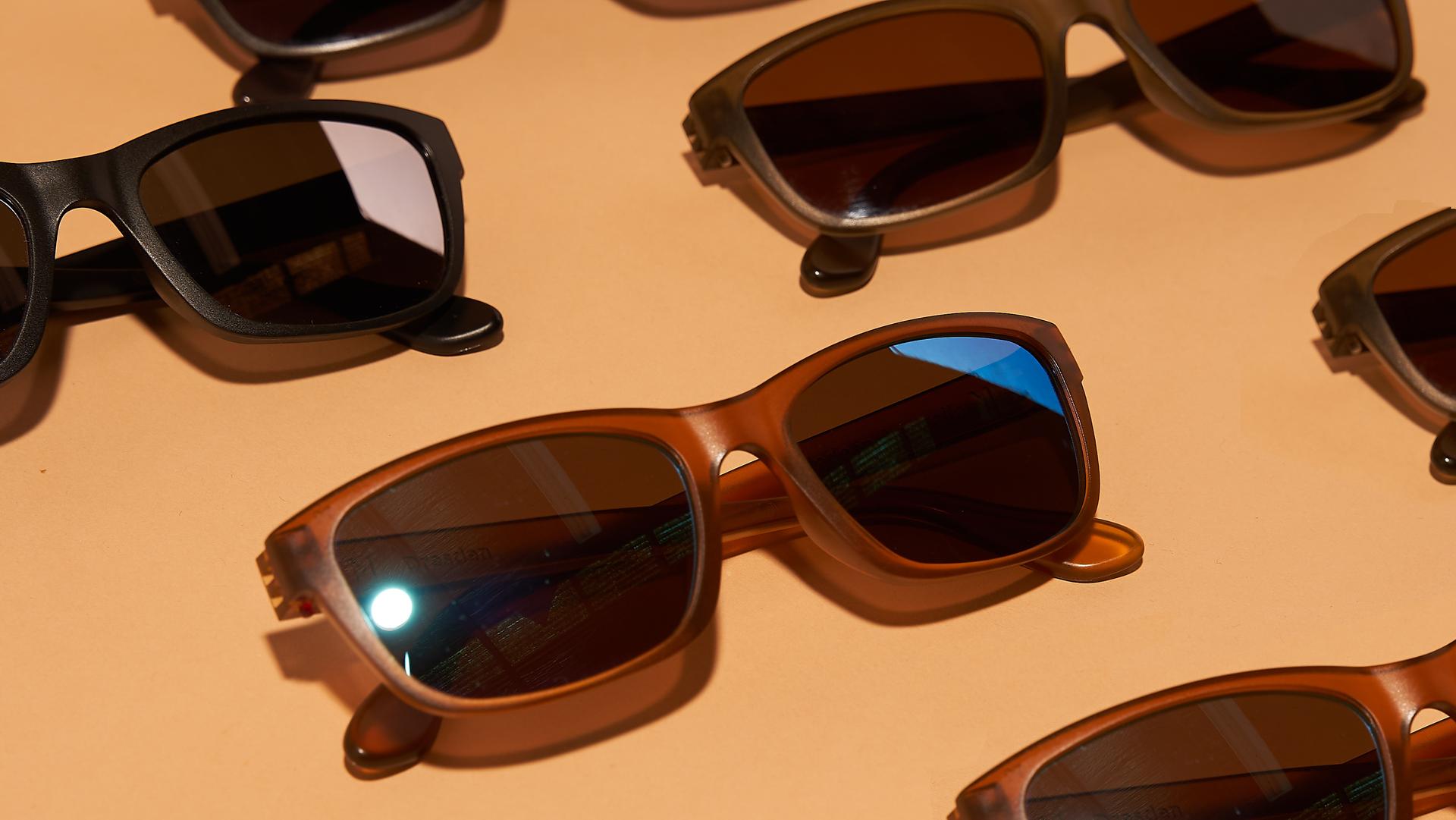
Autumn in Australia doesn’t always look like crunchy maple leaves and grey skies. In many places it’s golden-afternoon light, milder days, and that first pull toward earthy layers—camel +knits, rust tees, olive jackets, warm denim. If your wardrobe shifts with the season, your eyewear can too.
This guide is for anyone who wants their glasses to feel effortless in the mirror and in photos—without getting lost in overly strict “seasonal colour analysis” rules. We’ll translate the idea of an “Autumn palette” into eyewear decisions you can actually make: frame colour, material, metal finish, and even lens tint choices that suit the softer, warmer feel of autumn.
Quick answer
Autumn palettes usually look best in warm, earthy frame colours: honey, caramel, warm browns, olive, and deep blues. If black frames feel harsh, try translucent colours, like clear frost. Use undertone (warm vs cool) and contrast (soft vs high) to narrow the best options.
What “Autumn palette” means in eyewear terms
Seasonal palettes are just shortcuts. In eyewear, “Autumn” typically points to three things:
- Warmth: colours with golden, peachy, olive, or caramel undertones
- Earthiness: tones inspired by wood, spice, stone, and foliage
- Softer contrast: many Autumn types look better when frame colour isn’t a stark, icy contrast against skin
In practical terms, this means Autumn-friendly eyewear tends to sit in the warm half of the colour wheel and leans toward matte or soft matte finishes rather than sharp, mirror-like shine.
The real secret: undertone + contrast beats a strict “season”
If you only remember one thing: undertone and contrast do most of the heavy lifting.
- Undertone asks: do warm colours (cream, camel) make you look more alive than cool colours (stark white, icy pastels)?
- Contrast asks: do you look best in strong, high-contrast combos (black and white) or softer blends (chocolate and cream)?
Autumn palettes usually equal warm undertone + medium-to-soft contrast, but there are “lighter” and “deeper” versions. We’ll cover those in a way that helps you choose frames, not just label yourself.
A 60-second self-check: Are you leaning Autumn?
Try this in natural daylight near a window (not under blue bathroom lights). If you can, check on a day with soft sun—very common in Aussie autumn afternoons.
Undertone check
Hold two items near your face:
- A warm item: cream, camel, mustard, warm gold jewellery
- A cool item: bright white, cool grey, silver jewellery
Notice what happens to your skin:
- If warm makes you look smoother, brighter, or less tired, you’re likely warm-leaning.
- If cool looks cleaner and more flattering, you may be cool-leaning (which might push you away from Autumn palettes).
Contrast check
Stand back and squint slightly at your reflection:
- If your features read “soft” (hair/eyes/brows blend gently), you’re likely to have low-to-medium contrast.
- If your features pop strongly (very dark hair + very light skin, or very bright eyes), you’re higher contrast.
Why it matters: low-contrast faces often do better with softer, translucent, and warm frame colours. High-contrast faces can handle deeper espresso, dark browns, and richer greens.
The best Australian autumn frame colours (and who they flatter)
Here’s the eyewear colour palette that tends to feel most “autumn” in real life. Use it like a menu: pick two or three colours to try on first.
1) Sepia, Dark Chocolate, Beeswax
Earth tones are the MVP of Autumn palettes because they are warm, varied, and forgiving. It adds interest without shouting.
Best for:
- Warm undertones of all depths
- People who want an “everyday neutral” that still looks styled
- Anyone who finds solid black frames too intense
Try these earthy directions:
- Beeswax (lighter, golden) for softer contrast faces
- Sepia (soft mid-brown) for most people
- Dark Chocolate (espresso) for deeper Autumn looks
2) Ginger Bread and beeswax
Golden browns and warm yellow frames are underrated. They give colour without a heavy outline, which is great for softer Autumn palettes and anyone who wears minimal makeup.
Best for:
- Fair-to-medium warm undertones
- People who want frames that “lift” the face without overpowering it
- Work-from-home and office wear—reads polished on camera
If you want a subtle change that still feels noticeable, start here.
3) Dark Chocolate, Charcoal Grey and Koala Grey
Deep browns and greys can give you the structure that black frames promise, but with less harshness.
Best for:
- Medium-to-deep Autumn palettes
- Higher contrast faces who still want warmth
- People with warm dark hair (deep brown, auburn, dark chestnut)
A tip: if you love the crispness of black but it makes your under-eye area look darker, a warm Chocolate brown often solves it.
4) Olive Oil, Forest Green, and Pistachio
Green frames can be surprisingly neutral when they’re earthy rather than bright. Olive reads sophisticated, especially in matte finishes.
Best for:
- Olive skin tones (it harmonises beautifully)
- Hazel/green eyes (it can make them look clearer)
- Anyone with a wardrobe full of denim, camel, and neutrals
If you’re nervous, choose a green that looks like dried eucalyptus leaves rather than emerald.
5) Midnight Blue and Denim Blue
Yes, some blues can be Autumn-friendly—when they lean green and look slightly smoky.
Best for:
- People who want colour but don’t love browns
- Deep Autumn palettes (deep blues looks rich next to warm skin)
- Brown eyes (deep blues can make them pop)
Avoid icy cobalt. Look for “petrol,” “peacock,” or "midnight" descriptors.
Matching frame colour to your features
Colour theory is helpful, but your hair, eyes, and brows change the “best” choice.
If you have brown eyes
Brown eyes often look brighter with warmth nearby:
- honey, sepia, olive, deep blue
If you have hazel or green eyes
Lean into greens and warm neutrals:
- Olive, amber, deep greens
If you have blue or grey eyes
Autumn palettes can still work—choose softer warmth:
- Deep blues, smoky greys, dark greys
If your hair is very dark
Go richer so frames don’t disappear:
- Dark Chocolate, deep blue, olive
If your hair is light or you’re going grey/silver
Choose lighter warmth for harmony:
- amber, clear, soft gerys
How to pair your eyewear with an Australian autumn wardrobe
Think of eyewear like shoes or a belt: it should connect your outfit, not compete with it.
Everyday neutrals (denim, cream, tan, oatmeal)
Best frames:
- Gingerbread
- Oat Milk
- Koala Grey
Earthy layers (olive, rust, chocolate, camel)
Best frames:
- Gingerbread
- Olive Oil
- Pistachio
Work looks (navy, charcoal, white shirts, blazers)
If your workwear leans cool (charcoal, crisp white), choose frames that add warmth without looking “loud”:
- Dark Chocolate
- Midnight Blue
Weekend casual (black tee + jeans, sneakers)
If you live in black basics, the trick is not to force yourself into all-brown everything. Try:
- Dark Chocolate (warm version of black)
- Midnight Blue (adds warmth but still feels edgy)
- Charcoal Grey (if it leans bronze rather than icy silver)
Lens tints and autumn light: what works in Australia
Autumn sun in Australia can still be bright, especially on clear days. If you wear sunglasses or tinted lenses, colour can support the autumn palette too.
Warm tints that usually suit Autumn palettes:
- Brown and amber: soften glare and keep colours warm
- Green: reduces glare while staying natural-looking
- Warm grey: more neutral, but choose a warmer cast if possible
If you’re choosing sunglasses, it’s worth reading Australian guidance on UV protection and suitable sunglass labelling—ARPANSA has a clear overview of sun protection and what to look for in sunglasses. ARPANSA guidance on sun protection and sunglasses.
Q&A: Do lens colours need to “match” your frames?
They don’t have to, but they should harmonise. A warm amber frame with an amber or brown tint feels cohesive. An icy blue mirror tint can clash with warm palettes, even if the frame colour is perfect.
Soft Autumn, Warm Autumn, Deep Autumn: pick your lane (without overthinking)
If you’ve ever felt “I’m kind of Autumn but not exactly,” this is usually why. Think of these as sliders:
Soft Autumn
- Low contrast, muted colouring
Best frames:
- Translucent amber, warm taupe, honey
Avoid:
- Very dark, highly saturated colours that overpower your softness
Warm Autumn
- Clear warm undertone, medium depth
Best frames:
- Classic amber, olive,
Avoid:
- Icy silver and cool greys that drain warmth
Deep Autumn
- Warm undertone with deeper hair/eyes, can handle richness
Best frames:
- Chocolate, midnight blue, forest green, pistachio
Avoid:
- Very light, washed-out colours that look “faint” against your depth
Q&A: Can an Autumn palette wear black frames?
Sometimes. Black tends to work better when:
- The frame is a classic shape
- Your natural contrast is high
- You wear warm makeup tones or warm wardrobe colours that balance it
If black always feels harsh, try warm espresso or dark blue first.
Common Autumn eyewear mistakes (and easy fixes)
Mistake 1: Choosing frames that are too cool
Symptoms:
- Skin looks a bit grey
- Under-eye area looks more pronounced
Fix:
- Switch silver to champagne/bronze
- Swap cool grey frames for warm taupe
Mistake 2: Going too dark too fast
Symptoms:
- Frames dominate your face
- Your features look smaller behind the frame
Fix:
- Try translucent colours
- Consider warmer tones
Mistake 3: Too much shine
High-shine silver or very glossy black can feel “hard” on warm, earthy colouring.
Fix:
- Choose semi-matte frames
- Pick translucents with soft variation instead of flat colour
Mistake 4: Picking a trendy colour that fights your wardrobe
If your clothes are mostly neutrals and earthy tones, neon or icy colours can feel disconnected.
Fix:
- Treat forest green, olive oil and gingerbread as “statement neutrals”
How to choose when you’re shopping online
Even with great colour theory, online shopping adds two challenges: lighting and fit.
Use three photos as your decision rule
When you shortlist a frame colour, check:
- A bright product photo
- A darker/side angle photo
- A real-life or user photo (if available)
You’re looking for undertones. Does the “brown” look golden/warm or grey/cool? Does the “gold” look like champagne/bronze or bright yellow?
Prioritise fit first, then colour
A perfect colour can still look wrong if the fit is off:
- Too wide: frames slide down, eyes sit too far inward
- Too narrow: discomfort at temples, distortion, pinching
- Wrong bridge fit: marks, slipping, or pressure
Once you have a shape that suits you, colour becomes much easier.
If you want to explore warm, autumn-friendly frame colours in everyday shapes, you can see prescription glasses & eyewear options and use the palette ideas here as your filter.
If you’re torn between two warm tones (like aber vs olive) or you want to check how a finish looks in real daylight, seeing options in person can make the decision much easier. You can see frames in person to compare colours and materials up close.
Q&A: What if I’m between warm and cool?
Go for “neutral-warm” options:
- Soft sepia (not too orange)
- Gingerbread (not bright yellow)
- Oat Milk
Then test in daylight. The right choice should make your skin look calmer and your eyes clearer.
A practical “Autumn frame starter kit” (pick one from each)
If you want a simple way to start:
- Everyday neutral: Gingerbread or Oat Milk
- Dressier option: Charcoal Grey or Koala Grey
- Bold option: Olive Oil or Pistachio
- Warm alternative to black: Dark Chocolate or Charcoal Grey
When you’re ready to narrow it down, focus on how you want the frames to feel:
- Softer and lighter: translucent amber
- Grounded and classic: Sepia
- Rich and dramatic: Dark Chocolate, Midnight Blue
To make that choice faster, it helps to find a frame colour that suits you by comparing warm neutrals first (ambers) before you jump to brighter colours.
Keeping your eyewear looking “autumn” all year
Seasonal palettes are fun, but the best frames are the ones you’ll wear daily. A few ways to make autumn colours feel timeless:
- Use colour in small doses: warm Gingerbread at the front, lighter colour on the arms
- Match one element of your face: brows, hair warmth, or eye flecks
For readers who want a warm, everyday look with plenty of flexibility, exploring high quality prescription sunglasses in Autumn-friendly tones can be a great next step—especially if you already know whether you lean soft, warm, or deep.